
AMD appears to be developing a new generation of GPUs that could revive multi-chiplet designs for consumer gaming. According to the LinkedIn profile of AMD senior fellow Laks Pappu, the company is working on “competitive 2.5D/3.5D chiplet-based and monolithic graphic SoCs” for future Radeon GPUs.
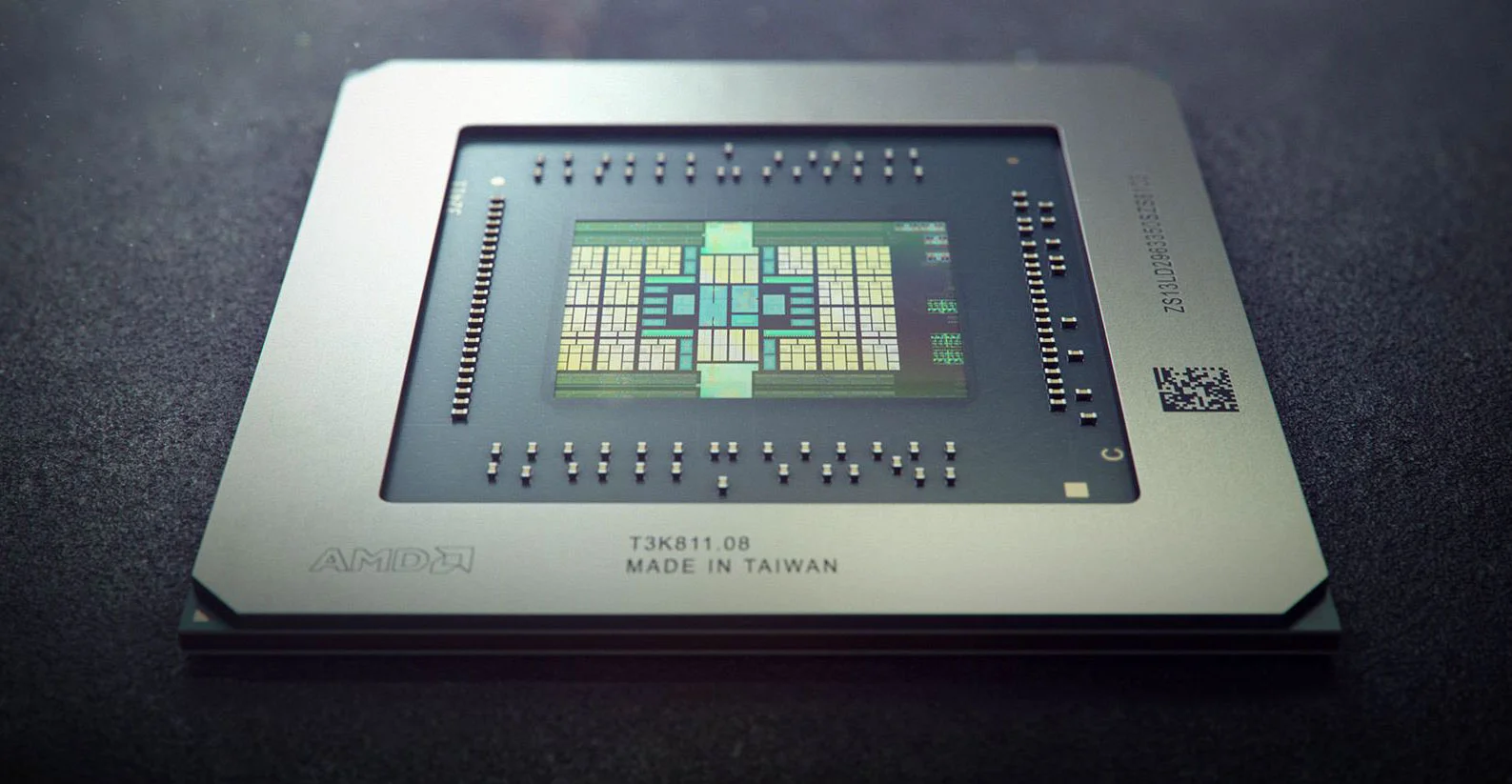
This suggests that AMD’s next-gen RDNA 5 graphics cards, codenamed Navi 5x, could include more advanced packaging technologies, potentially introducing multi-tile GPU designs to the mainstream market. These configurations use several smaller chips connected closely together to act as one larger processor.
Pappu joined AMD in 2022 after decades at Intel, where he worked on GPU designs like DG1 and Alchemist, as well as experimental multi-tile architectures. He now leads efforts on future Radeon and data center GPUs, including those built for cloud gaming and AI.
Currently, AMD’s top-end consumer GPU, the Radeon RX 9070 XT, competes with Nvidia’s mid-range RTX 5070 Ti. But a true high-end rival hasn’t appeared under RDNA 4. That could change with RDNA 5, which is expected to launch in late 2026 or early 2027.
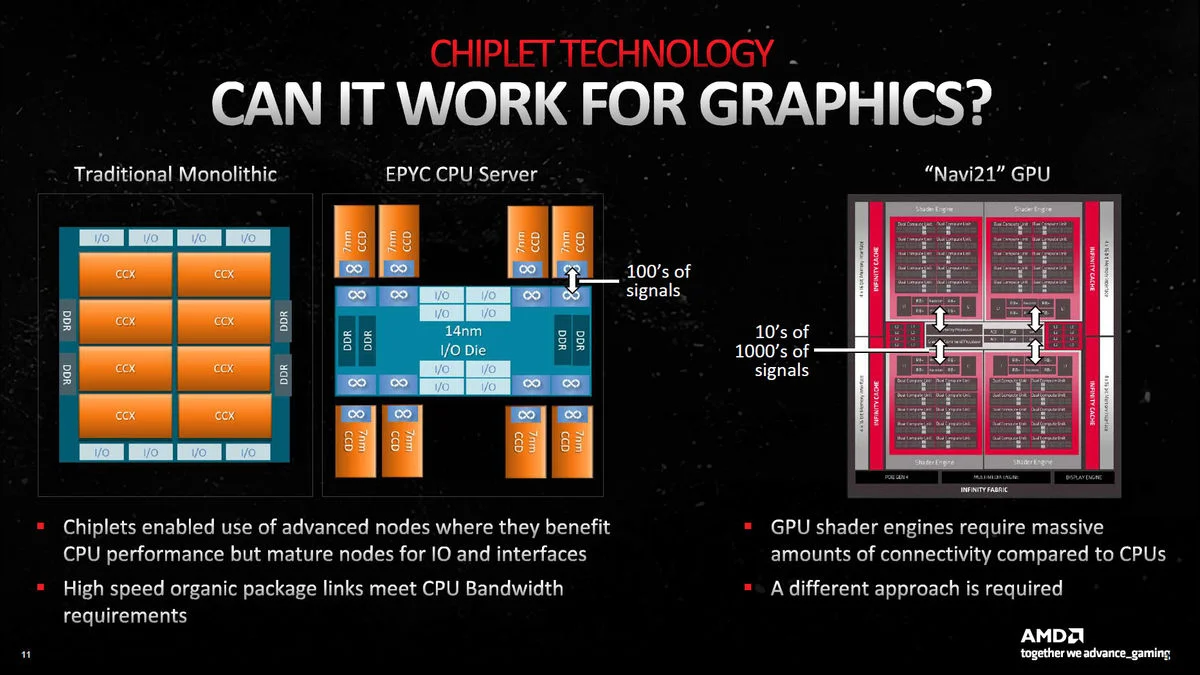
Developing a chiplet-based GPU for gamers is far more complex than for CPUs. GPU tasks require tight coordination across thousands of threads, and any latency between tiles can hurt performance. Maintaining high bandwidth and coherency across dies is costly and requires advanced interconnects like Infinity Fabric.
Despite the challenges, AMD already has experience with chiplet designs in its CPUs and even in its Navi 31 GPUs, which disaggregate memory and cache functions. That GPU’s symmetrical layout hints that AMD could eventually divide the core compute logic too.
Pappu’s involvement in Navi 5x and upcoming Instinct MI500 AI GPUs means he’s likely shaping these architectures from the ground up. That gives him significant control over the shift toward chiplet designs in gaming GPUs if they prove viable.
Multi-chip GPUs are already being used in the data center space by AMD and Nvidia. But bringing that to consumers depends on solving packaging, latency, software integration, and cost challenges.
AMD is currently in the late development stage for RDNA 5. If its silicon proves successful, we could see a dramatic shift in GPU design that could once again separate AMD from Nvidia in terms of innovation.
For now, this development is internal and unconfirmed by AMD. But with Pappu’s role and past experience, all signs point to a major architectural shift on the horizon for Radeon.







0 Comments
Leave a Reply